Checks and Balances of Budgeting a Film
As a filmmaker, it is essential to understand how to control money while making a film. Not everyone in the production is concerned about the money, but someone has to ensure the money is used correctly and supports the overall production. Sure, the line producer is watching the costs, but it is not just his responsibility. It is also your responsibility as the producer. Here are some key points to consider when taking control of the production money.
Above-the-Line
This article has touched on this area of budgeting, but a closer look would help gain a better understanding of the cost and should help the filmmaker. Above-the-line covers all costs associated with the writer, director, producers, cast, and stunts. The costs are controlled by competition, including other studios, production companies, and financiers. This aspect of the budget comes into play at the early stages of the project and rarely influences cost-control decisions once the film is in production. However, stunt performers often face unpredictable problems, and if a filmmaker can avoid using them, all the better. When a script calls for a character to be injured on camera, a stunt performer is required. The producer needs to control this production area because significant savings can be achieved by effectively managing stunts.
The casting budget is one of the trickiest costs to predict because so many variables come into play with on-screen talent. The Screen Actors Guild bargains for pay for actors in the industry. Some production companies agree only to hire SAG-AFTRA actors, who are signatory companies. But filmmakers should not be intimidated by working with only SAG actors. The guild is approachable and willing to work with independent producers because they want their actors to work; the production agreement changes based on the shooting location. For example, a scale actor in Los Angeles will earn $859.00 a day, with ten percent going to the agent on top of the day rate. Extra actors or general background performers, represented by SAG-AFTRA, earn $ 152 per day, plus all fringe benefits. These wages can vary.
Fringes
There are additional payments to governments and unions for every dollar spent on casting and stunt work. On average, it is approximately 32% on the fringes, similar to the payroll of any company. Such costs include state, local or federal-mandated requirements. Pension, health, and welfare payments for members of guilds and other fringe groups might also be considered, including employer-funded disability and medical programs. But fringes can’t be overlooked when a filmmaker looks at ways to cut costs.

Shooting Timeline
The film’s shooting period influences the budget. Do the math. The longer it takes to shoot a movie, the more it will cost the filmmaker. An example of the cost of producing a film with a one-day small unit “pick up” shot is about $20,000. It includes the location and rates for above-the-line and below-the-line crew, excluding principal actors and background extras.
The shooting period encompasses everything related to the time spent filming, including the time required to wrap up production, which typically takes about two weeks after shooting is completed. The costs include labor for the entire crew, camera, grip, and electric equipment rentals, construction, wardrobe, transportation, and so forth. As mentioned earlier in this article, some producers refer to this section as part of the below-the-line. Below-the-line includes post-production costs as well.
Post-Production
After they complete the shooting period, the process is called post-production. This area of budgeting encompasses editing, visual effects, sound mixing, music, and other related expenses. If the film is in poor shape when it reaches post-production, the filmmaker, director, and producers do everything in their power to correct it. Everything could go well during the shooting period, but the climate might change once the project reaches post-production. There are endless stories about runaway productions happening in post. In their professional opinion, the studio and financiers want to create the best “look” possible. The film can look even better because technical experts can bring to life any image or idea the studio and financiers desire. If the filmmaker loses control at this point in the film’s budgeting, all the hard work is for nothing. The filmmaker must understand the importance of a tight, coordinated effort with all the key players, including producers, directors, editors, post-production supervisors, and financiers.
Other Costs
As a final point, they often overlook other costs when budgeting the project because they are not glamorous or creative. They include insurance, legal expenses, on-set publicity costs, and other related expenses. The financiers are familiar with this aspect of budgeting and typically know the different costs before agreeing to finance the production. Filmmakers should involve financiers, the studio, a bonding company, and the line producer when discussing additional expenses to protect themselves and gain insights from experienced opinions.
A filmmaker might come across a financier or studio head mentioning that an “overhead” account includes the contingency. Nowadays, it is hardly ever used. The key factor is securing financing, with the bonding company agreeing to provide a bond for the project. As a side note, there is no way to avoid a bonding company when a bank participates in the overall production. Obtaining a completion bond is not a bad idea because it guarantees investors or banks that the film, barring an Act of God, can be produced effectively and within the budgeted amount.

Budget Points
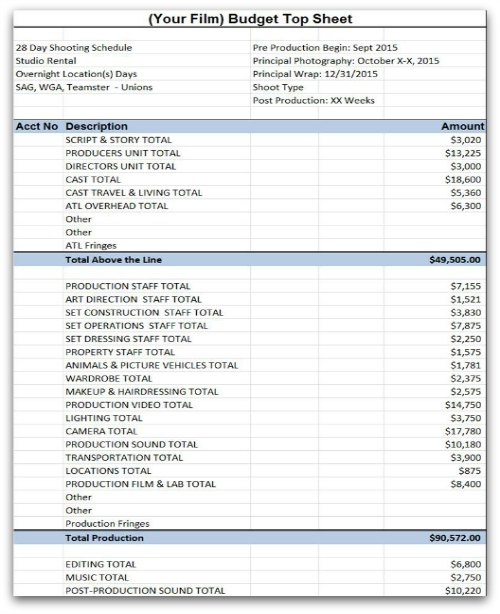
All budget points can typically be found on the budget summary sheet. Once the filmmaker has the budget in place and approved, their attention needs to shift from budgeting to reporting expenses as they arise. The line producer and production accountant can help the filmmaker with the comparisons. The comparisons are traditionally referred to as the Weekly Cost Report. It is a progress report on the financial performance of production.
The Weekly Cost Report
The Weekly Cost Report brings a whole new meaning to being creative and is an adventure in discovering the many ways to bring cost reporting to life. The production accountant and line producer can be your allies when gathering expenses. Accounting can utilize a technicality that filmmakers need to know when reporting the Weekly Cost Report. It is all about how the filmmaker controls the money by learning how to direct the reporting process sufficiently and ethically, resulting in a decent yet dependable presentation of the production costs. The filmmaker is presenting the progress report to those backing the film production. Regardless, the report is provided to the studio executives, bonding company, and financiers every week.
Alternative Funding
Not having enough funds to finish a film is common among independent filmmakers and producers. The key is to keep going and find alternative sources of funding to see your production through to the end. Alternative funding campaigns offer a tremendous opportunity to leverage a financing route that involves the whole community from day one. As the producer or filmmaker, you must choose the best funding source for your production. It will take hard work and a dedicated team to pull it off. The hard work is doing your homework and learning how to do it successfully. The Internet is full of resources, and each funding platform offers directions and guidelines to achieve your funding.
Crowdfunding
Crowdfunding is a resource that has an excellent track record.
There are three reputable platforms: GoFundMe, Kickstarter and Indiegogo. As a filmmaker, you must study these platforms to learn how to get the best funds for your efforts. The key is to rally your team, from actors to production designers. Every individual who plays a role in your film should be involved in the crowdfunding project. The more players you have, the better the chance of reaching your funding goal.
Grants Help Funding
Funding a film production through grants is a resource that has been around for quite some time. They fill the Internet with endless resources for filmmakers to use in grant applications. They set most grants up for a particular quality or forte of the film being produced. For example, African Americans, Native Americans, or Women in Film are popular areas for grant applications. But one of the first things grant readers look for is “passion and connection to the project.” The readers view thousands of applications and know that the most essential ingredient in a proposal is the person’s passion for the project. It will still be there three years from now, as it may take too long to finish the film.

Film Festivals
Film Festivals are another resource for funding a film production. The Sundance Film Festival and its institute are an excellent example of a film festival offering funding for filmmakers, from screenwriting to music. The institute’s website supports a dedicated page for its funding opportunities. Filmmakers can peruse the site and understand what they need to present to the institute to be considered a candidate. Filmmakers attending film festivals is another way to network and find funding.
Foundations Help Fund Film Productions
Foundations are another source of funding for a film production. These foundations offer grants, just like applying for one. Knowing who you are approaching is critical when applying for a grant. Who are the judges? What projects have you won before? Were they first-time filmmakers? Did they have a history of documentary films or feature films to win? Look at the prior winners to give you an idea of who you are applying to. Then you can direct your application to that person.