

Native American Ballet Dancer
Maria Tallchief broke barriers as the first Native American woman (Osage) in ballet. She broke down ethnic barriers as one of the first Americans to flourish in her field. The New York Times called her one of America’s most brilliant ballerinas of the 20th century.
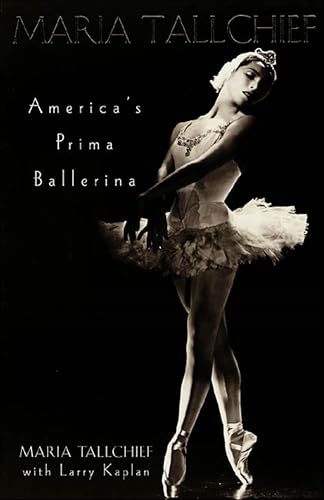
Maria Tallchief: America’s Prima Ballerina
In her book, “Maria Tallchief: America’s Prima Ballerina,” she also explained how the Osage headrights affected her father. She said it felt as if her father owned property everywhere in Fairfax—the pool hall and local movie theater. Her family lived in a 10-room brick house on a hill overlooking the Osage reservation. They spent the summer in Colorado Springs because of the sweltering heat in Oklahoma. Tallchief also wrote in her book about the Osage Reign of Terror, “villainous white” who married Osage women and killed them to inherit their headrights.
Born During the Osage Reign of Terror
On January 24, 1925, Maria Tallchief was born in Fairfax, Oklahoma, on the Osage Indian Reservation, during the Osage Reign of Terror described in Killers of the Flower Moon, directed by Martin Scorsese, and in the book of the same name by David Grann.
The true story Killers of the Flower Moon recounts the murder of over twenty Osage Indians from 1921 to 1926 because of their oil mineral rights. The tribal law made each member wealthy by granting them headrights, a share of the mineral trust. Because the government deemed the Osage unfit to manage their wealth, it appointed guardians to supervise their headrights.
Tallchief’s grandfather, Peter Bigheart, helped negotiate the agreement that founded the reservation and maintained the tribe’s mineral rights. When the Osage Indians discovered oil on the reservation, they became the wealthiest Native American tribe in the USA.
Maria’s father, an Osage Indian, Alexander Joseph Tall Chief, was a wealthy real estate executive. Her mother, Ruth Mary Porter Tall Chief, was of Scottish and Irish descent. Marie Tallchief wrote in her autobiography that her father never worked “a day in his life” because of the headrights.
Tallchief Early Years
Tallchief spent her childhood in Los Angeles, California, honing her ballet skills through years of training. Her mother had her start formal ballet lessons in Fairfax, Oklahoma, before she was four.
At eight, her family moved to Los Angeles, California. The purpose was to establish advanced ballet training for Maria and her sister, Marjorie. Their mother wanted them to work in Hollywood musicals.
Wore Ballet Flats Most of Her Life
Ballet Career Started on the Osage Reservation
Maria’s mother encouraged her and her sister, Marjorie, to take ballet and piano lessons during their toddler years. They performed at Osage civic organizations.
Moved to California
At age eight, Marie’s family moved to Beverly Hills, California, where she continued to study ballet and piano. Marie studied under prominent Russian ballerinas, Madame Nijinska and Anna Pavlova, by age twelve.
Because Tallchief was a Native American, members of the ballet community were skeptical. However, choreographer George Balanchine recognized her talent. He nurtured her into a prima ballerina.
Marie and Marjorie became professional ballet dancers and leading figures in America. In their retirement years, they founded Lyric Opera’s Ballet School in 1974, teaching the Balanchine method. Tallchief’s ballerina career took her around the world, resulting in a professional and personal relationship with George Balanchine.
Tallchief Moved to New York City
At 17, Marie moved to New York City to establish herself in a major ballet company. Here, she made her official name, Marie Tallchief.
For the next five years, she danced with the Ballet Russe de Monte Carlo and met her first husband, choreographer George Balanchine. He co-founded the New York City Ballet in 1946, and Marie became its first prima ballerina.


Leonardo DiCaprio portrays Ernest Burkhard in an unlikely love story, and Lily Gladstone portrays Mollie Kyle. Oil transformed the Osage Nation into one of the wealthiest populations in the world at the start of the 20th century. I found the film informative, with an authentic Scorsese flair. There is a scene in which Robert De Niro’s character, William K. Hale, stands with a group of ballerinas and their teacher. I am sure it’s paying homage to Maria Tallchief’s legacy. Today, it’s a legacy celebrated on the reservation with statues of Tallchief.
Tallchief Discusses Balanchine
Balanchine Ballet Technique Influences
Tallchief’s passion for ballet and Balanchine’s challenging choreography made the art form more popular. But some argue that Tallchief, as the Firebird in Stravinsky’s The Firebird, in the first year brought accolades to the New York Ballet. Playing the Sugarplum Fairy in The Nutcracker catapulted the Christmas ballet from obscurity to popularity in America.
Balanchine elevated Tallchief’s career as a prima ballerina, soloing her in his first ballet with the Russe de Monte Carlo called Song of Norway and as Alexandra Danilova’s understudy. Balanchine repeatedly cast Tallchief in significant roles in classical ballet. Eventually, she became the second lead when Ballet Imperial opened.
Balanchine and Tallchief grew fond of each other, and he told The Washington Post she was his “crucial artistic inspiration.” Their working relationship crossed into a personal relationship, and they married in 1946.
During their professional career, Balanchine influenced Tallchief’s ballet style by encouraging her to start over with the fundamentals of the craft. She lost weight and elongated her neck and legs as she learned to hold her chest high. Danilova taught Tallchief extensively, transforming her into a featured soloist.
Tallchief created the role of Coquette and Night Shadow and was the first ballerina to perform it. The most challenging role in the ballet was another milestone in her illustrious career.
Her career blossomed with a stint with the Paris Opera Ballet, becoming the first American to perform with the company. The French audiences loved her.

New York City Ballet
Returning to New York in 1948, Balanchine co-founded the New York City Ballet, giving Tallchief the first prima ballerina role. During this time, Balanchine revolutionized ballet, creating dances that demanded athleticism, aggressive dancing and speed. Tallchief complied with all his choreography. To the point, the New York Times critic wrote she did everything except spin on her head.
Tallchief’s popularity and talent helped boost the fledgling ballet company, dancing eight times a week. She received critical success, and the audience praised her dancing as the Sugarplum Fairy in the annual Christmas classic, The Nutcracker.
Other dancing roles under Balanchine’s choreography included Swan Queen in Swan Lake and Eurydice in Orpheus. Tallchief created different lead roles in Jones Breach, Prodigal Son and A La Francaix. She also danced in Balanchine ballets with no storyline, interpreting music with theatrical elements. Balanchine was masterful at creating images or expressing and provoking emotion. Tallchief’s fiery dancing and athletic performances solidified Balanchine’s era as the most prominent choreographer.
Tallchief’s Marriages
Balanchine and Tallchief’s marriage was annulled in 1952. Shortly after, Tallchief married Elmourza Natirboff, a pilot. They divorced two years later, and she married Henry D. (Buzz) Paschen Jr in 1955. They had a daughter, Elise Maria Paschen, an award-winning poet. They remained married until he died in 2004.
Tallchief’s Illustrious Career
Tallchief continued establishing firsts, such as the American Ballet Theatre’s first guest dancer and prima ballerina. She was also the first American to dance at the Bolshoi Theatre in Russia. She was Rudolf Nureyev’s chosen partner for his American television debut.
Her Oklahoma people honored her with an array of statues and an official day of recognition. The National Women’s Hall of Fame inducted her, and she received a National Medal of Arts from the United States Congress. She also received a Kennedy Center Honor for her lifetime achievements.
In 2012, Tallchief broke her hip and passed away on April 11, 2013, because of complications from her injury.
References
- Maria Tallchief | Native American, Prima Ballerina, Choreographer | Britannica
Maria Tallchief was a ballet dancer whose exquisite technique was enhanced by her energy, speed, and grace. Considered one of the greatest ballerinas of the United States, she was also the muse of choreographer George Balanchine. - Tallchief’s Daughter Remembers Hearing About the Osage Reign of Terror
Named for the Osage word meaning ‘prayer,’ the poem was Elise Paschen’s way of tapping into a tragedy to which she feels intimately linked. - When Maria Tallchief Took Paris by Storm
She arrived with Balanchine in 1947. Postwar Paris would not be the same. - Killers of the Flower Moon (2023) – IMDb
Killers of the Flower Moon: Directed by Martin Scorsese. With Leonardo DiCaprio, Robert De Niro, Lily Gladstone, and Jesse Plemons.